Friday, 12 February 2021

7 Ways to Stop Sugar Cravings For Good - DrJockers.com

7 Ways to Stop Sugar Cravings For Good - DrJockers.com

7 Ways To Stop Sugar Cravings

Sugar Cravings, 7 Ways To Stop Sugar Cravings

7 Ways To Stop Sugar Cravings

Anyone who has ever tried to change their diet knows it can be hard to give up foods they love. As a doctor that strongly advocates for a ketogenic-style eating plan, I've realized just the stranglehold that sugary-sweet foods can have on a person's willpower. In this article you will learn my top strategies to stop sugar cravings for good.

Sugar has become the bane of our society and the sad part is, so many people have no idea what kind of damage it does inside our bodies. At almost 130 grams of sugar per person (PER DAY!), America is by far the highest consumer of dietary sugar in the world.

Think about this.. 130 grams of sugar is the equivalent of about TEN TABLESPOONFULS and the average American eats that every day! It's no wonder conditions like obesity, cancer, and diabetes are some of the most prevalent chronic diseases in the US. That being said the strategies outlined in this article could change the trajectory of millions of lives.

Sugar Cravings, 7 Ways To Stop Sugar Cravings

Causes of Sugar Cravings 

There are a number of different mechanisms why one would have sugar cravings throughout the day.  The most common underlying triggers for this include blood sugar imbalances and insulin resistance due to a poor diet or large feeding gaps throughout the day, HPA axis dysfunction and emotional eating.

HPA axis dysfunction is what happens when we are under a tremendous amount of stress.  For many this stress leads to a desire for sugar.  Most of us have experienced emotional eating crisis as well when we looked for sugar to help us cope with certain emotions such as loneliness, sadness or depression.

Sugar Cravings, 7 Ways To Stop Sugar Cravings

Blood Sugar Imbalance 

Consumption of sugar-rich foods by our ancestors was much different from the present. Sweets were consumed only on occasion and in much lower quantities. Today it seems like if we don't get a constant flow of it we can't function properly. The average American consumes upwards of 150 LBS of sugar per year and about 50% of Americans consume ½ a pound of sugar every day.

High doses of sugars throughout the day sends blood sugar levels on a rollercoaster that should optimally remain relatively stable. Consistently spiking blood sugar levels also results in chronically elevated insulin which contributes to inflammation, hormone imbalance, weight gain, and yes, more sugar cravings.

Additionally, it's possible to develop something called reactive hypoglycemia. This occurs because of a rapid drop in blood sugar that occurs only a few hours after consuming a sugar-rich meal. Symptoms of this include irritability (feeling hangry), weak muscles and fatigue (1).

Following this crash we go into emergency food-seeking mode. Unfortunately, if we're not conscious of what is going on, the food sought out tends to be another sugar bomb that restarts the cycle.

Sugar Cravings, 7 Ways To Stop Sugar Cravings

HPA Axis Dysfunction 

The body contains an extensive amount of regulatory systems to keep itself healthy. One that has received a lot of attention in recent years is the HPA axis. The HPA axis consists of the hypothalamus, pituitary gland, and the adrenal glands (which are responsible for regulating stress).

When we are under chronic stress, eating a poor diet, or constantly in a poor emotional state for extended amounts of time, it can lead to a disruption in the HPA axis (also known as adrenal fatigue). This can be problematic for many reasons.

The HPA axis is responsible for cortisol regulation and cortisol plays a key role in blood sugar balance. If HPA axis dysfunction leads to chronically high or low cortisol levels then blood sugar imbalance may result which will then result in cravings.

There is also some evidence that chronically elevated cortisol levels can interfere with the reward center in our brains and reinforce negative habits (2). Strengthening the HPA axis may be a critical factor to stop sugar cravings.

Sugar Cravings, 7 Ways To Stop Sugar Cravings

Emotional Eating 

If you feel like your eating habits are driven by your emotions, or become poor during times of high stress, this is not uncommon. What I often find in this scenario is that by addressing dopamine levels, people find it much easier to regulate their behaviors.

Dopamine is a neurotransmitter that is responsible for the reward system in our brain that has a lot to do with our motivation to accomplish goals, make good decisions, and control emotions. It has been shown that sugar consumption not only spikes blood sugar, but also causes a temporary spike in dopamine.

This dopamine-spiking effect of sugar can actually become addictive and when trying to cut sugar from the diet we often encounter a dopamine deficit that makes regulating our behaviors more difficult. Additionally, blood sugar imbalance can increase dopamine enzyme activity. This means dopamine is broken down faster and a higher amount is needed to stimulate the same amount of pleasure (3).

Sugar Cravings, 7 Ways To Stop Sugar Cravings1. Lemons, Limes, and Apple Cider Vinegar 

Sprinkling the juice of lemons and limes over your foods will change the way your body processes them during digestion. The citric acid within those juices will change the way your digestive system processes your foods in a way that slows blood sugar response (4).

Apple cider vinegar has a very similar effect and has been shown to lower the glycemic index (blood sugar response) to higher carbohydrate meals significantly (5).

All three of these liquids also have a range of other nutrients that can aid in digestion and help promote better insulin signaling. Simply adding these to your foods can be a great strategy. As an alternative, you can also add 1-2 Tbsp. to a glass of water and drink about 30 minutes before eating for a similar benefit.

Sugar Cravings, 7 Ways To Stop Sugar Cravings

2. Low Carb, Ketogenic-Style Diet 

As has been alluded to already, many of our blood sugar problems simply result from the overconsumption of sugar. One of the most powerful dietary strategies I have found to stabilize blood sugar, improve hormone balance, and kick sugar cravings is a ketogenic-style or low-carb/high-fat diet.

By replacing high amounts of refined sugars with predominantly healthy fats and only consuming slow-digesting, low glycemic carbohydrates (when necessary), you are taking a massive step towards better health and blood sugar regulation.

Another benefit of eating predominantly fats is their effect on satiety (feeling full after a meal). Dietary fats help promote proper secretion of leptin which is a hormone responsible for satiety as well as healthy blood sugar balance.

Sugar Cravings, 7 Ways To Stop Sugar Cravings

3. Air Squats

Another MAJOR reason for blood sugar imbalance is inactivity. If we don't use our muscles regularly, then stored sugar remains in the cells while blood sugar gets diverted into fat stores.  By using your muscles through movement, you can burn up those stored sugars and improve blood sugar response for 2 hours following.

My recommendation is to perform 20-50 air squats whenever you start to feel the craving for sugar coming on. For an added benefit, try this Super Brain Yoga move that combines the squatting motion with a specific pressure application using your fingers to improve brain function!

If you have knee problems or for some reason cannot perform a squat, you can also perform an overhead press with light weight.

4. Water & Good Salts 

Sugar cravings can often be a result of dehydration and improper mineral balance. At first it can seem like these variables don't tie together but it actually makes a lot of sense why you would crave sugar when dehydrated.

Our liver utilizes water in the process of converting glycogen into glucose for energy. If we are dehydrated then our ability to maintain steady blood sugar decreases and the body tries to compensate by signaling you to consume more sugar.

Consuming adequate amounts of a high-quality salt such as Himalayan pink will help maintain proper hydration by providing trace minerals and electrolytes like magnesium, sodium and potassium. They will also promote proper balance of stress hormones which profoundly influence blood sugar.

Use pink salts generously on foods or add a pinch to your water before drinking. I personally use this pink salt. 

Sugar Cravings, 7 Ways To Stop Sugar Cravings

5. Use Natural Sweeteners

Eliminating processed sugars and fast-digesting high-carb foods is one of the primary strategies to stabilizing blood sugar and eliminating sugar cravings. To safely consume sweet, delicious foods, make them homemade with natural sweeteners like stevia and monk fruit.

Both stevia and monk fruit have been proven safe for diabetic populations because they have no significant impact on blood sugar levels. What I find amazing is that some evidence shows that incorporating these sweeteners into your diet can actually improve your ability to maintain steady blood sugar levels (6, 7)!

The fact that they contain no sugar also makes them awesome for use in a ketogenic diet.

Sugar Cravings, 7 Ways To Stop Sugar Cravings

6. Reduce Stress & Adapt Stronger 

Stress can be one of the most destructive forces to the human body. If we learn to tame it however, it can also be one of our greatest means for growth. The first step is make sure we separate bouts of stress with enough rest to fully recover. Our body is adapted for short bursts of high stress, but chronic stress can lead to problems.

I fully understand the fast-paced nature of our society today so for times of prolonged stress it is important to ground ourselves through exercises like deep breathing, meditation, gratitude, prayer, and getting out in nature. These kinds of activities pull the body back into a parasympathetic state where recovery can occur.  In this article, I go over a number of strategies to help you adapt stronger.

For additional support, it's important to obtain adequate amounts of B vitamins and magnesium to help support stress responses in the body. I have also found adaptogens like cordyceps and ginseng to be incredibly powerful for this.  I will often use Adapt Strong to help my clients adapt to stress more effectively.

Sugar Cravings, 7 Ways To Stop Sugar Cravings


7. Support Dopamine Production

Dopamine is most commonly associated with the reward and pleasure centers in the brain. When we finish a task or accomplish a goal, our brain releases dopamine that gives us a feeling of euphoria. In this way, dopamine also highly regulates our motivation and ability to exhibit will power. Consequently, I have found that sugar cravings and compulsive eating habits are often a sign of low dopamine levels.

Supporting proper dopamine production will allow you have greater willpower over your dietary choices and overcome sugar cravings. Proper strategies for optimizing your dopamine levels are outlined in this article.

In my clinic, I always recommend Dopamine Plus for my patients who are struggling to overcome sugar cravings. It contains clinical doses of L-Tyrosine and DL-Phenylalanine which both help to promote healthy dopamine production. I have found that it works very well in conjunction with Adapt Strong for supporting healthy dopamine levels.

Sugar Cravings, 7 Ways To Stop Sugar Cravings

Sugar Cravings, 7 Ways To Stop Sugar Cravings

Regenerate Yourself Masterclass

We know more than ever before about the body's miraculous, biological capacity to RENEW and REGENERATE — it's unprecedented NEW SCIENCE using powerful dietary, lifestyle and mindset techniques to reach your healthiest, happiest and most resilient you!

—>>Sayer Ji's Regenerate Yourself Masterclass is online and free from February 15th – Feb 21st, 2021 — click here to register for free now!

With accelerated aging, chronic disease and a growing sense of depletion having reached epidemic proportions, modern medicine and human health are at a critical crossroads.

The truth is: your genes are NOT in control of your health destiny. YOU can make informed decisions about using and nourishing the evolutionary miracle that is your body.

Sugar Cravings, 7 Ways To Stop Sugar Cravings

WHY ATTEND?

In this 7-part Regenerate Yourself masterclass, Sayer Ji, founder of GreenMedInfo, explains how revolutionary new developments in biology can be leveraged to help prevent and manage the most common health afflictions of our day: cancer, heart disease, neurodegenerative diseases and metabolic syndrome.

Radical resilience, not disease, is your body's destiny!

Join us at this masterclass to unlock your radical resiliency by learning:
● Fascinating new science of "food as information"
● Using spices, common foods and culinary techniques as "medicine"
● Facts about cancer and heart disease screening (and prevention!)
● How your body extracts energy from sources other than food
● To reverse the most common forms of degeneration (with food!)
● Regenerative, simple fitness practices with maximized effects
● Sorting through conflicting, out-of-date dietary recommendations
● And so much more!

Antiquated thinking and scientific dogma have long obstructed true understanding of our innate untapped potential for self-regeneration and radical healing. However, biological time is NOT a downward spiral and chronic illness is NOT inevitable when you learn to implement nature's tools of resilience.

Encoded within every tissue of your body is the ability to regenerate; mechanisms that provide you with the right to a life of joy and vitality.

In this Regenerate Yourself masterclass, Sayer will help you unlock "radical resiliency" with cutting-edge scientific findings, ancestral wisdom and health-promoting practices — with these tools you'll optimize your diet, maximize exercise results, reduce stress and cultivate a thriving environment.

—>> I'll see you online at The Regenerate Yourself Masterclass when you register for free today!

P.S. When you register for The Regenerate Yourself Masterclass, you'll also unlock early access interviews, free guides and helpful eBooks about living your most resilient life!

Sugar Cravings, 7 Ways To Stop Sugar Cravings

Sources For This Article Include

1. UW Health
2. Stephens, M. A. C., & Wand, G. (2012). Stress and the HPA axis: role of glucocorticoids in alcohol dependence. Alcohol Research : Current Reviews, 34(4), 468–83. PMID: 23584113
3. Kleinridders, A., Cai, W., Cappellucci, L., Ghazarian, A., Collins, W. R., Vienberg, S. G., … Kahn, C. R. (2015). Insulin resistance in brain alters dopamine turnover and causes behavioral disorders. Proceedings of the National Academy of Sciences of the United States of America, 112(11), 3463–8. PMID: 25733901
4. Radulian, G., Rusu, E., Dragomir, A., & Posea, M. (2009). Metabolic effects of low glycaemic index diets. Nutrition Journal, 8, 5–12. PMID: 19178721
5. Johnston, C. S., & Gaas, C. A. (2006). Vinegar: medicinal uses and antiglycemic effect. , 8(2), 61. PMID: 16926800
6. Assaei, R., Mokarram, P., Dastghaib, S., Darbandi, S., Darbandi, M., Zal, F., … Ranjbar Omrani, G. H. (2016). Hypoglycemic effect of aquatic extract of Stevia in pancreas of diabetic rats: PPARγ -dependent regulation or antioxidant potential. Avicenna Journal of Medical Biotechnology, 8(2), 65–74. PMID: 27141265
7. Zhou, Y., Zheng, Y., Ebersole, J., Huang, CF. (2009). Insulin secretion stimulating effects of mogroside V and fruit extract of luo han kuo (Siraitia grosvenori Swingle) fruit extract. PMID: 21351724

Sugar Cravings, 7 Ways To Stop Sugar Cravings

Was this article helpful?


Sent from my iPhone

Monday, 25 January 2021

Fwd: MESRC Updates: Fitness-Related Workout on YouTube (Week 33)


---------- Forwarded message ----------
From: Ministry of Education <moe_mesrc@moe.edu.sg>
Date: Monday, January 25, 2021
Subject: MESRC Updates: Fitness-Related Workout on YouTube (Week 33)
To:


<This email is sent in BCC. to all MOE schools and HQ colleagues>

Dear Colleagues,

As part of MOE staff well-being programme under OLive, MESRC has lined up the following fitness-related workout from YouTube to help you to keep fit and healthy during this period.  These YouTube are free and easily accessible. 

Type of Fitness-Related Workout

Description

YouTube URL

Bowflex® Bodyweight Workout - Three-Minute Perfect Plank

Tired of doing crunches to work your core? The plank is a phenomenal exercise that gives you the option of doing something other than a crunch to work your abs. This three-minute plank workout takes advantage of how variable the plank can be while still pushing you to work hard and strengthen your core.

https://youtu.be/ynUw0YsrmSg

30min Power Yoga "Detox" 

In this Power Yoga "Detox" 30-minute practice you will move through a heavy dosage of twists to take care of the spine and massage the internal organs.

https://youtu.be/wp10ZXEb3e8

Fast Walking in 30 minutes

30 minutes of fast walking every day is so healthy!

https://youtu.be/enYITYwvPAQ


Happy Workout!


Jason Ng

Sports & Recreation Manager, MOE Sports & Recreation Club • Tel: +65 6460 9862 • Fax: +65 6465 4530

Ministry of Education Sports & Recreation Club • 21 Evans Rd, Singapore 259366 • http://www.mesrc.net


CONFIDENTIALITY: If this email has been sent to you by mistake, please notify the sender and delete it immediately. As it may contain confidential information, the retention or dissemination of its contents may be an offence under the Official Secrets Act.


--

Mr Chang CL


Poi Ching School

21 Tampines St. 71 Singapore 529067

Tel: 6785 6420 Fax: 6785 7198

_______________________

Sunday, 24 January 2021

Forget the Gym: Walking Is the Superior Form of Exercise

Forget the Gym: Walking Is the Superior Form of Exercise

Forget the Gym: Walking Is the Superior Form of Exercise

Abandon your punishing fitness plan! For true physical and existential salvation, nothing beats a good walk, argues author Will Self

I am certainly not advocating civil disobedience in the pages of Men's Health, but if there's one thing that kept me fit, sane and healthy during the first lockdown of 2020, it was walking.

And should the worst happen and lockdowns become a semi-regular feature of the coming months, it's in the simple practice of pedestrianism that I know I'll find solace again.

Advertisement - Continue Reading Below

Last spring, as infection levels rocketed and the numbers of people hospitalised, intubated and dying were all rising, I would set out for long walks on the empty streets of south London, where I live. In the government's "shield" category – by reason of being on chemotherapy for an incurable myeloid blood condition – I knew I'd encounter no one who would pose any threat to me, viral or otherwise, while I would scrupulously avoid coming into contact with the rare and fugitive souls I'd spot traversing the once-bustling but now eerily silent city.

The decision to walk contained just that soupçon of defiance necessary to convince me that while mass hysteria gripped the nation, I remained calmly autonomous. The physical activity during those chilly small hours was sufficient to maintain muscle tone and healthy posture, even if pounding pavement and parkland is no substitute for pumping iron.

Advertisement - Continue Reading Below

But it's in the overall promotion of that quality we've come to think of as "wellness" – in contrast to the apparent sickness of the very planet itself – that walking seems to come, ambling, into its own.

The Outside Advantage

I cycle to get around and have increased this since the pandemic, for obvious reasons. I do yoga from time to time, when my ageing frame begins to creak and groan. But I confess: going to the yoga studio is a stretch for me, while gyms have always filled me with an instinctive revulsion. You don't have to be a communist to appreciate the force of Marx's observation: "The worker does not make use of the working conditions. The working conditions make use of the worker; but it takes machinery to give this reversal a technically concrete form." Well, we may not work on assembly lines in factories as much as formerly, but I can't help seeing the contemporary gymnasium, with its emphasis on training with machines, as a strange sort of nostalgia for that state: working out in lieu of… working.

Advertisement - Continue Reading Below

The great virtue of walking is that it requires nothing by way of equipment. There is no joining fee

There's this problem with the gym – then there's that hell described by Jean-Paul Sartre as "other people". I once visited Gold's Gym at Venice Beach in California, the legendary location for the film Pumping Iron (1977), which pulled competitive bodybuilding, preening and posing, into public perception. The gym's manager told me that the most important pieces of equipment in the entire establishment were the mirrors, and laughed indulgently (he was built like the proverbial well-constructed outdoor lavatory) at his clientele's, and his own, consummate narcissism. But for those of us who neither possess such a hardened body nor are desirous of building one, gyms can be intimidating places – intimidating, and expensive, too.

Advertisement - Continue Reading Below

During lockdown, people were doing sit-ups, press-ups and even lifting weights in parks and other open spaces, but as soon as the gyms reopened, many disappeared back indoors. I really cannot understand this. To me, the most bizarre sight in the world is someone on a running or cycling machine, rather than running, cycling, or, of course, walking. Most of us, I'd contend, spend too much time either looking at screens (both for work and leisure) or through them, as we commute to work, drive to the shop, or even drive to take exercise. The last of these seems to me another cosmic solecism – and as it's often the prelude to exercising inside, constitutes a doubling down on the denatured and technologically mediated nature of our contemporary existence. And, with the pandemic unabated, life for many of us has become still more desk-bound, the outside worlds of work, sociality and leisure all collapsing into two dimensions and 26-odd inches.

Advertisement - Continue Reading Below

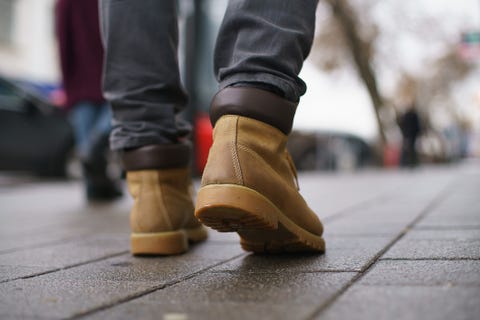
The great virtue of walking as a serious pursuit is that it requires nothing by way of equipment or specialist kit except the comfortable and hard-wearing shoes you already possess. There are no joining fees to walk, and you certainly won't feel body-shamed by your fellow pedestrians, many of whom will be pensioners on their way to the shops. Walking is also by its nature spontaneous: you do it all the time, anyway, so why not simply increase the amount you do? The pensioners are strolling to the shops. So can you. And you can do it even if the shops are a lot further off. Which brings me to my main selling point for new-entrant walkers: its immediacy is what makes walking so appealing. There's no need to locate a venue; you simply get up and walk out whichever door is nearest. I'm fairly rigorous about this aspect of walking, and I think it's key to the success of the entire enterprise. Indeed, while I can just about accept driving to take a walk in a particularly beautiful or interesting place, for me, the really life-sustaining walks are the ones I take from wherever I happen to be.

Advertisement - Continue Reading Below

If I'm in the country, I walk in that countryside. If I'm in the city, I walk in that built environment. And if I'm in Selly Oak on a wet Sunday afternoon in January, then I take a walk in Selly Oak. Walking is the way I bring my mind and body together through being actively in the place I am, rather than trying to avoid it by travelling somewhere else, or blot it out by filling one or other of my senses with quite other environments.

The most conspicuous example of this is music, via headphones or car stereo, so as to make a soundtrack for the film of your life – which is really, when you think about it, creating a giant, imaginary screen around your experience of the world. I know, you're thinking, "But Selly Oak (or Southampton, or Selhurst, for that matter) is pretty boring on a wet Sunday afternoon in January." To which I can only reply with one of those exquisitely annoying parental formulations: if you're bored, it's because you're boring. And by "boring", I mean unwilling to take an interest in anything that doesn't immediately appeal to you.

Advertisement - Continue Reading Below

Lost Connections

Let me reinforce this with an anecdote. I once went to Easter Island, the most remote inhabited island in the world and one of the most exotic and extraordinary places to boot. The friend I went with was not a walker – though he did have other virtues – but gamely agreed, in principle, to join me for some hikes. The first attempt I made to hold him to his promise was also the last. We had driven to the north end of the island, where there's an extinct volcano, Poike. It's an extraordinary sight: an eminence of some 370m, entirely covered in grass, but with two quartz-glinting granitic outcrops on its shoulder, like epaulettes on a military officer's tunic. We parked our hire car and began walking towards it – the giant, bright-green knoll, outlined by the deep ultramarine of the mid-Pacific Ocean. After no longer than five minutes, my companion – a famous artist – groaned: "I'm bored." And I struggled hard not to pick up one of the chunks of quartz lying in the grass and use it to bash his brains in.

timefreeze

Advertisement - Continue Reading Below

Which is all by way of illustrating this point: you cannot come to walking expecting some sort of quick fix. This is the ultimate slow activity. Yet once you've attuned yourself to the leisurely progress you're making, you start to appreciate the extraordinary benefits. For one, as you're not on an A-to-B journey with a specific aim in mind, you really can forget about any reward associated with arrival – such as the endorphin hit beloved of our running brethren – and instead abandon yourself to the pleasures of transit itself. In a car, or even on a bike, the world's contours are ironed out for you, but on foot there's a direct correlation between your muscle movements and your senses. The play of the breeze, the sunshine (and, naturally, the rain) on your face and any exposed flesh; the swish of grasses and other herbage against your legs; the smells and the sights – the walker is constantly surveying the territory he moves through with a full 360° panoramic viewing.

Moreover, unlike anyone using mechanised transport, he also has – returned to him, as it were – the foreground, which for most, most of the time, is reduced to a blur. The walker, if he consents not to be bored, has returned to him those vestigial senses of exteroception (the dispensation of objects in the vicinity), proprioception (awareness of the dispensation of his own body), and even interoception – that hearkening to the movements of our internal organs that, for the most part, we repress.

Advertisement - Continue Reading Below

My walking isn't simply a leisure pursuit – it's transportation, entertainment, fitness and therapy

Furthermore, the car driver, the train and plane passenger – they all see the world around them as a series of detached views, but the walker is resolutely rooted in that world, his calves aching as he ascends a hill, his knees taking up the strain as he descends. I bumper stickerishly proclaimed above that it's the journey that matters for the walker, and that arriving brings no special reward, but there's at least one exception to this. When doing really long country walks – and I'm talking around 25 miles in a day – I find that just before I fall asleep that night, I'm visited with the most extraordinary reverie. I experience the entire day's journey over again: every stile I've climbed and stream I've leaped, the whorled windows of cottages I've peered into and the muddy furrows I've ploughed along.

Advertisement - Continue Reading Below

The first time this happened to me, I was overwhelmed. I had just done 25 miles out from central London and into the Essex countryside. There was the long distance, which, even as I was walking had gifted me a sensual and immediate awareness of the topography, and there was the map-reading, whereby I found myself regularly looking from the three-dimensional territory to its two-dimensional representation, and then back again.

Advertisement - Continue Reading Below

The way we currently navigate using GPS systems places us at the centre of the screen and world. In this way, it gives us absolute location (we can even get a precise grid reference), yet no real orientation. We've all had the experience of getting off a train or bus and then wandering about trying to coordinate our movements with those of our little-blue-dot alter ego, so that we can work out where the hell we are. But old-fashioned map-reading, which is the method I'd strongly enjoin for longer exurban walks, entails orienting yourself as a condition of any route-finding at all. This means that the further you go, the more you start to apprehend that that wood must border that reservoir – and furthermore, that the ground rising behind the reservoir must be a spur of that range of hill. It's this precise interpretation of the landscape (not without reason is it termed "map-reading") that leads to the astonishing exactness of recall. I retraced that walk into Essex a decade later and found that I could do it without any recourse to the map, such was the detail with which I remembered the first venture.

In Search of Lost Time

Of course, walking without a map is an even more liberating experience. I am not a rambler, or any other species of Gore-Tex-sporting hiker. Don't get me wrong – I have nothing against them, but their preoccupation with walking in particular places and at particular times is an anathema to me. My walking isn't simply a leisure pursuit; rather, it's transportation, entertainment, fitness regime and psychotherapy rolled into one. Apart from the aforementioned sensible shoes, I do take waterproofs with me. The über-annoying and self-satisfied hikers say things like: "There's no such thing as bad weather, only inappropriate clothing." And in respect of these temperate and rain-washed isles, they're most definitely right. However, though adequately equipped to this extent, I often set out with no clear idea of where I'm going to go. This is the dérive – or aimless drift – beloved of psychogeographers, among whose number I'm happy to include myself.

Advertisement - Continue Reading Below

Taking our cue from the Situationists, a group of art revolutionaries who wandered the storied streets of 1950s and 1960s Paris, we see walking as a way of not only traversing space but time as well. Let me explain: once attuned to topography and well versed in the built environment, the walker becomes alert to a different sort of temporality: not the collective hallucination of incremental time displayed on the watches and computer displays that we all look at too much, but the subjective apprehension of our own duration in this world – our fundamental pace, if you like. The French Enlightenment philosopher Jean-Jacques Rousseau (himself no mean stomper) maintained: "We think at walking pace." And what's revealed to me when I'm walking and thinking at the same pace is the pace of everything around me – just as when we pass by two tall trees or buildings, their position relative to one another (the parallax view) makes us aware of the angle of our own traverse, so there's a temporal parallax that enables us to become aware of time not simply as an inexorable river flowing in one direction, but a huge and fluid body of fluxes and refluxes, in which we swim even as we walk.

I realise the above may seem a little verging on the mystical – especially if you began reading this with competitive track walking in mind, so hoping for some straightforward tips on whether you need spiked shoes, and how to avoid wiggling your arse too egregiously. I am, however, in deadly earnest. I sincerely believe that a walker can experience a form of time travel; moreover, that if he understands the environment he's moving through even a modicum, there's a sort of letting go that occurs as the metronomic beat of the legs begins to resemble some sort of chant – a physical "om mani padme hum", if you like. We're familiar with the free association of ideas, but in these states of walking meditation, I often feel as if I am free-associating places and spaces: seeing where I've been in terms of where I am now, and vice versa, such that it no longer matters if I'm boxed in by wet privet in Selly Oak on a wet Sunday afternoon in January.

Advertisement - Continue Reading Below

I would never claim that my sort of walking is adventurous in the way that man-hauling to the South Pole, or rowing the Atlantic is considered to be. But I wouldn't want that sort of adventure anyway, given that it involves ceaseless and strenuous repetition to the exclusion of all else. Talk about being bored. Instead, for me, the adventure begins every day I set out. I'm confident, even if I'm only walking to a bypass-bound retail park, that I'll encounter something fresh, new and provocative – rather than just another "new car smell" Magic Tree air-freshener, dangling from the rear-view mirror, like a man caught in a trap.


Sign up to the Men's Health newsletter and kickstart your home body plan. Make positive steps to become healthier and mentally strong with all the best fitness, muscle-building and nutrition advice delivered to your inbox.

SIGN UP

For effective home workouts, uplifting stories, easy recipes and advice you can trust, buy six issues of Men's Health UK.

SUBSCRIBE


Sent from my iPhone

10 Easy Ways to Boost Your Metabolism (Backed by Science)

10 Easy Ways to Boost Your Metabolism (Backed by Science)

10 Easy Ways to Boost Your Metabolism (Backed by Science)

We include products we think are useful for our readers. If you buy through links on this page, we may earn a small commission. Here's our process.

Metabolism is a term that describes all the chemical reactions in your body.

These chemical reactions keep your body alive and functioning.

However, the word metabolism is often used interchangeably with metabolic rate, or the number of calories you burn.

The higher it is, the more calories you burn and the easier it is to lose weight and keep it off.

Having a high metabolism can also give you energy and make you feel better.

Here are 10 easy ways to increase your metabolism.

1. Eat Plenty of Protein at Every Meal

Eating food can increase your metabolism for a few hours.

This is called the thermic effect of food (TEF). It's caused by the extra calories required to digest, absorb and process the nutrients in your meal.

Protein causes the largest rise in TEF. It increases your metabolic rate by 15–30%, compared to 5–10% for carbs and 0–3% for fats (1Trusted Source).

Eating protein has also been shown to help you feel more full and prevent you from overeating (2Trusted Source, 3Trusted Source, 4Trusted Source, 5Trusted Source, 6Trusted Source, 7Trusted Source, 8Trusted Source).

One small study found that people were likely to eat around 441 fewer calories per day when protein made up 30% of their diet (9Trusted Source).

Eating more protein can also reduce the drop in metabolism often associated with losing fat. This is because it reduces muscle loss, which is a common side effect of dieting (10Trusted Source, 11Trusted Source, 12Trusted Source, 13Trusted Source, 14Trusted Source, 15Trusted Source).

Summary

Eating more protein can boost your metabolism so that you burn more calories. It can also help you eat less.

2. Drink More Cold Water

People who drink water instead of sugary drinks are more successful at losing weight and keeping it off (16Trusted Source, 17Trusted Source, 18Trusted Source, 19Trusted Source, 20Trusted Source).

This is because sugary drinks contain calories, so replacing them with water automatically reduces your calorie intake.

However, drinking water may also temporarily speed up your metabolism (18Trusted Source, 21Trusted Source).

Studies have shown that drinking 17 ounces (0.5 liters) of water increases resting metabolism by 10–30% for about an hour (22Trusted Source, 23Trusted Source).

This calorie-burning effect may be even greater if you drink cold water, as your body uses energy to heat it up to body temperature (21Trusted Source, 24Trusted Source).

Water can also help fill you up. Studies show that drinking water a half an hour before you eat can help you eat less (25Trusted Source, 26Trusted Source, 27Trusted Source).

One study of overweight adults found that those who drank half a liter of water before their meals lost 44% more weight than those who didn't (19Trusted Source).

Summary

Water can help you lose weight and keep it off. It increases your metabolism and helps fill you up before meals.

3. Do a High-Intensity Workout

High-intensity interval training (HIIT) involves quick and very intense bursts of activity.

It can help you burn more fat by increasing your metabolic rate, even after your workout has finished (28Trusted Source, 29Trusted Source, 30Trusted Source, 31Trusted Source).

This effect is believed to be greater for HIIT than for other types of exercise. What's more, HIIT has also been shown to help you burn fat (32Trusted Source, 33Trusted Source, 34Trusted Source).

One study in overweight young men found that 12 weeks of high-intensity exercise reduced fat mass by 4.4 pounds (2 kg) and belly fat by 17% (35Trusted Source).

Summary

Mixing up your exercise routine, and adding in a few high-intensity workouts, can boost your metabolism and help you burn fat.

4. Lift Heavy Things

Muscle is more metabolically active than fat, and building muscle can help increase your metabolism (36Trusted Source, 37Trusted Source, 38Trusted Source, 39Trusted Source).

This means you will burn more calories each day, even at rest (40Trusted Source).

Lifting weights will also help you retain muscle and combat the drop in metabolism that can occur during weight loss (41Trusted Source, 42Trusted Source, 43Trusted Source, 44Trusted Source).

In one study, 48 overweight women were placed on a diet of 800 calories per day, along with either no exercise, aerobic exercise or resistance training (45Trusted Source).

After the diet, the women who did the resistance training maintained their muscle mass, metabolism and strength. The others lost weight, but also lost muscle mass and experienced a decrease in metabolism (45Trusted Source).

You can find weights to incorporate into your workout online.

Summary

Lifting weights is important for building and retaining muscle. Higher amounts of muscle will result in a higher metabolism.

5. Stand up More

Sitting too much is bad for your health (46Trusted Source).

Some health commentators have even dubbed it "the new smoking." This is partly because long periods of sitting burn fewer calories and can lead to weight gain (47Trusted Source).

In fact, compared to sitting, an afternoon of standing up at work can burn an extra 174 calories (48Trusted Source).

If you have a desk job, try standing up for short periods to break up the length of time you spend sitting down. You can also invest in a standing desk (49Trusted Source, 50Trusted Source, 51Trusted Source, 52Trusted Source).

You can find standing desk kits and setups online.

Summary

Sitting for a long time burns few calories and is bad for your health. Try to stand up regularly or invest in a standing desk.

6. Drink Green Tea or Oolong Tea

Green tea and oolong tea have been shown to increase metabolism by 4–5% (53Trusted Source, 54Trusted Source, 55Trusted Source).

These teas help convert some of the fat stored in your body into free fatty acids, which may increase fat burning by 10–17% (56Trusted Source).

As they are low in calories, drinking these teas may be good for both weight loss and weight maintenance (57Trusted Source, 58Trusted Source, 59Trusted Source).

It's thought their metabolism-boosting properties may help prevent the dreaded weight loss plateau that occurs due to a decrease in metabolism.

However, some studies find that these teas do not affect metabolism. Therefore, their effect may be small or only apply to some people (60Trusted Source, 61Trusted Source).

You can find green tea and oolong tea online.

Summary

Drinking green tea or oolong tea may increase your metabolism. These teas may also help you lose weight and keep it off.

7. Eat Spicy Foods

Peppers contain capsaicin, a substance that can boost your metabolism (62Trusted Source, 63Trusted Source, 64Trusted Source).

However, many people can't tolerate these spices at the doses required to have a significant effect (65Trusted Source).

One study of capsaicin, at acceptable doses, predicted that eating peppers would burn around 10 additional calories per meal. Over 6.5 years, this could account for 1 pound (0.5 kg) of weight loss for an average-weight male (66Trusted Source).

Alone, the effects of adding spices to your food may be quite small. However, it may lead to a slight advantage when combined with other metabolism-boosting strategies (67Trusted Source).

Summary

Eating spicy food could be beneficial for boosting your metabolism and help you maintain a healthy weight.

8. Get a Good Night's Sleep

Lack of sleep is linked to a major increase in the risk of obesity (68Trusted Source, 69Trusted Source).

This may partly be caused by the negative effects of sleep deprivation on metabolism (70Trusted Source).

Lack of sleep has also been linked to increased blood sugar levels and insulin resistance, which are both linked to a higher risk of developing type 2 diabetes (70Trusted Source, 71Trusted Source, 72Trusted Source, 73Trusted Source).

It's also been shown to boost the hunger hormone ghrelin and decrease the fullness hormone leptin (74Trusted Source, 75Trusted Source, 76Trusted Source).

This could explain why many people who are sleep-deprived feel hungry and struggle to lose weight.

Summary

Lack of sleep can decrease the number of calories you burn, change the way you process sugar and disrupt your appetite-regulating hormones.

9. Drink Coffee

Studies have shown that the caffeine in coffee can boost metabolism by 3–11%. Like green tea, it also promotes fat burning (77Trusted Source, 78Trusted Source, 79Trusted Source).

However, this seems to affect lean people more. In one study, coffee increased fat burning by 29% for lean women, but only 10% for obese women (80Trusted Source).

Coffee's effects on metabolism and fat burning may also contribute to successful weight loss and maintenance (77Trusted Source, 81Trusted Source).

Summary

Drinking coffee can significantly increase your metabolism and help you lose weight.

10. Replace Cooking Fats With Coconut Oil

Unlike other saturated fats, coconut oil is relatively high in medium-chain fats.

Medium-chain fats can increase your metabolism more than the long-chain fats found in foods like butter (82Trusted Source, 83Trusted Source, 84Trusted Source, 85Trusted Source, 86Trusted Source).

In one study, researchers found that medium-chain fats increased metabolism by 12% compared to long-chain fats, which raised it by just 4% (87Trusted Source).

Due to the unique fatty acid profile of coconut oil, replacing some of your other cooking fats with it may have modest benefits for weight loss (88Trusted Source, 89Trusted Source).

You can find coconut oil online.

Summary

Replacing other cooking fats with coconut oil may help boost your metabolism slightly.

The Bottom Line

Making small lifestyle changes and incorporating these tips into your routine can increase your metabolism.

Having a higher metabolism can help you lose weight and keep it off, while also giving you more energy.

ADVERTISEMENT

Start a custom weight loss program

Noom helps you adopt healthy habits so you can lose weight and keep it off. Your program is customized to your goals and fitness needs. Just take a quick assessment and get started today.


Sent from my iPhone

Obesity began to rise as we…

From a friend… ___ This caught my attention (attached) I wonder if anyone consciously made the swaps or did media and Government messagi...